
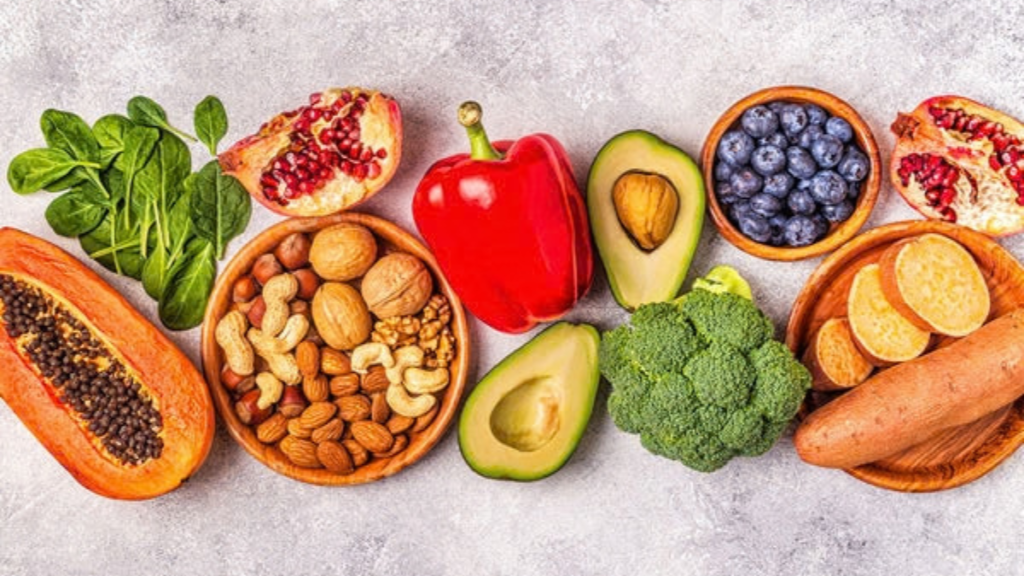
Healthy aging starts at the cellular level. Every day, your cells need nutrients to produce energy, maintain cell membranes, repair normal damage, and support the many processes that keep your body functioning.
While no individual food can stop or reverse aging, a nutrient-dense diet rich in vegetables, fruits, whole grains, healthy fats, nuts, legumes, and quality protein can support overall health throughout life.
Here are 15 nutritious foods worth including regularly in a balanced diet.
1. Blueberries
Blueberries are packed with naturally occurring plant compounds called anthocyanins, which give the berries their deep blue-purple color.
They also provide vitamin C, fiber, and other antioxidants. Antioxidants help protect cells against oxidative stress caused by unstable molecules known as free radicals.
Fresh or frozen blueberries are easy to add to oatmeal, yogurt, salads, or smoothies. A powerful high-performance blender can also make it easier to combine berries with leafy greens, seeds, yogurt, and other nutrient-rich foods in smoothies.
2. Salmon
Salmon is an excellent source of protein and omega-3 fatty acids, particularly EPA and DHA.
Omega-3 fats are important components of cell membranes and contribute to normal heart and brain function. Protein also supplies amino acids the body needs for maintaining and repairing tissues.
Try baked or grilled salmon alongside vegetables and whole grains for a balanced meal.
3. Avocados
Avocados provide monounsaturated fats, fiber, potassium, vitamin E, folate, and several beneficial plant compounds.
Healthy unsaturated fats are particularly important because fats form an essential part of cell membranes and help the body absorb fat-soluble vitamins such as vitamins A, D, E, and K.
Add avocado to salads, whole-grain toast, grain bowls, or homemade dips.
4. Spinach
Spinach packs a remarkable amount of nutrition into relatively few calories.
It provides folate, vitamin C, vitamin K, carotenoids, magnesium, and other nutrients. Dark leafy vegetables also contain plant compounds with antioxidant properties.
Try adding spinach to omelets, soups, salads, pasta dishes, and smoothies.
For people trying to eat more vegetables consistently, preparing ingredients ahead of time with a premium food processor can make chopping, slicing, shredding, and preparing healthy meals considerably easier.
5. Walnuts
Walnuts provide plant-based omega-3 fatty acids in the form of alpha-linolenic acid (ALA), along with protein, fiber, minerals, and polyphenols.
They are an easy nutrient-dense addition to oatmeal, yogurt, salads, and homemade trail mixes.
Because nuts are calorie-dense, a small handful is usually enough to add flavor, texture, and nutrients to a meal.
6. Broccoli
Broccoli belongs to the cruciferous vegetable family and provides vitamin C, vitamin K, folate, fiber, carotenoids, and several bioactive plant compounds.
Rather than relying on one particular vegetable, aim to eat a variety of vegetables with different colors throughout the week.
Lightly steaming broccoli is one simple preparation method that keeps it flavorful without requiring heavy sauces or excessive added fats.
7. Extra-Virgin Olive Oil
Extra-virgin olive oil is rich in monounsaturated fat and contains naturally occurring polyphenols.
Replacing some sources of saturated fat with unsaturated fats can be part of a heart-healthy eating pattern.
Use olive oil for salad dressings, roasting vegetables, marinades, and lower-to-moderate-temperature cooking.
People who prepare most of their meals at home may also find a premium stainless steel cookware set useful for preparing vegetables, fish, legumes, whole grains, and other minimally processed foods without relying heavily on convenience meals.
8. Tomatoes
Tomatoes provide vitamin C, potassium, folate, and lycopene, the carotenoid responsible for much of their red color.
Interestingly, cooking tomatoes can make lycopene easier for the body to absorb, particularly when tomatoes are eaten with a source of healthy fat.
Tomatoes can be incorporated into soups, sauces, salads, stews, and roasted vegetable dishes.
9. Lentils
Lentils combine plant protein with dietary fiber, iron, folate, potassium, and several other important nutrients.
They are particularly useful for increasing the amount of plant-based protein and fiber in your diet.
Try lentils in soups, curries, salads, grain bowls, or as a partial replacement for meat in certain dishes.
10. Sweet Potatoes
Sweet potatoes are naturally rich in beta-carotene, which the body can convert into vitamin A.
Vitamin A contributes to normal immune function and the maintenance of healthy tissues. Sweet potatoes also provide fiber, potassium, vitamin C, and other plant compounds.
Roast them with herbs, add them to soups, or serve them alongside vegetables and a source of protein.
11. Eggs
Eggs provide high-quality protein along with nutrients including choline, vitamin B12, selenium, and several carotenoids.
Choline is particularly important because the body uses it in cell membranes and for several metabolic processes.
Eggs can be paired with vegetables and whole grains for a simple nutrient-dense breakfast or lunch.
12. Almonds
Almonds provide vitamin E, magnesium, fiber, protein, and predominantly unsaturated fats.
Vitamin E has antioxidant activity and helps protect cells against oxidative damage.
Almonds work well as a snack or as an addition to oatmeal, yogurt, salads, and homemade granola.
If nuts, seeds, grains, and other whole-food ingredients are a regular part of your diet, a Vitamix professional-grade blender can also be used to prepare homemade nut butters, smoothies, soups, and sauces.
13. Red Bell Peppers
Red bell peppers are particularly rich in vitamin C and also contain carotenoids and other beneficial plant compounds.
Vitamin C functions as an antioxidant and is also necessary for collagen production.
Enjoy peppers raw with hummus, sliced into salads, roasted with other vegetables, or added to stir-fries.
14. Greek Yogurt
Plain Greek yogurt provides protein, calcium, phosphorus, vitamin B12, and, depending on the product, live bacterial cultures.
Protein becomes particularly important as we age because maintaining adequate protein intake alongside physical activity helps support muscle health.
Choose varieties with little or no added sugar and add berries, nuts, seeds, or fresh fruit for natural sweetness.
15. Green Tea
Green tea contains plant compounds called catechins, which belong to the larger family of polyphenols.
Rather than viewing green tea as an anti-aging treatment, consider it another minimally processed beverage that can fit comfortably into an overall healthy eating pattern.
If tea is part of your daily routine, a premium temperature-control electric kettle makes it easier to prepare green tea and other beverages at controlled water temperatures.
Building a Diet That Supports Healthy Aging
The biggest nutritional benefit is unlikely to come from eating one so-called “anti-aging” superfood. What matters more is the overall pattern of your diet.
Build meals around a variety of colorful vegetables and fruits, whole grains, beans and lentils, nuts and seeds, healthy unsaturated fats, and quality sources of protein such as fish, eggs, dairy, or plant proteins.
Blueberries, salmon, avocado, spinach, walnuts, broccoli, olive oil, tomatoes, lentils, sweet potatoes, eggs, almonds, peppers, Greek yogurt, and green tea can all contribute different nutrients to that bigger picture.
Combine these foods with regular physical activity, sufficient sleep, hydration, stress management, and other healthy lifestyle habits to give your body the nutritional foundation it needs as you age.

