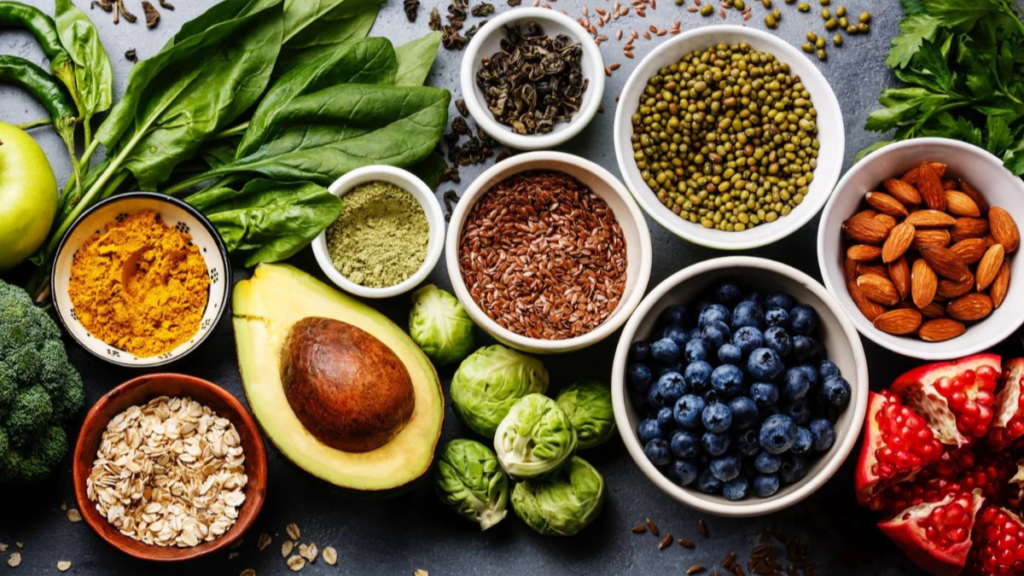

Good digestion is an important part of overall health. Your digestive system helps break down food, absorb nutrients, and eliminate waste.
While no single food can guarantee perfect digestion, eating a varied diet rich in fiber, fruits, vegetables, whole grains, legumes, seeds, and fermented foods can help support normal digestive function.
Here are 12 nutritious foods that can easily become part of a digestion-friendly eating pattern.
1. Oats
Oats are an easy way to add more dietary fiber to your diet. They contain soluble fiber, including beta-glucan, and can support normal bowel regularity.
Try oatmeal topped with berries, chia seeds, or sliced fruit for a simple, fiber-rich breakfast.
2. Apples
Apples provide dietary fiber and beneficial plant compounds. Eating a properly washed apple with its skin provides more fiber than eating the flesh alone.
Enjoy an apple as a snack or slice it into oatmeal or yogurt. Pairing it with natural peanut butter can also make a satisfying snack.
3. Pears
Pears are a naturally sweet source of fiber and can be a simple addition to your daily diet.
Try adding sliced pears to oatmeal, salads, yogurt, or whole-grain toast.
4. Kiwi
Kiwi provides fiber, vitamin C, and other nutrients. Research has also explored kiwi’s potential role in supporting bowel regularity.
Add kiwi to smoothies, yogurt, fruit bowls, or simply enjoy it on its own.
If you regularly make smoothies, a quality blender can make it easier to combine fruits, oats, chia seeds, and other nutritious ingredients.
5. Chia Seeds
Chia seeds are rich in dietary fiber and absorb liquid to form a gel-like consistency.
They’re particularly useful in overnight oats, smoothies, and chia pudding.
Try combining chia seeds with milk, berries, and cinnamon and refrigerating overnight.
If you’re not used to eating high-fiber foods, introduce chia seeds gradually.
6. Lentils
Lentils provide both fiber and plant-based protein.
Add them to soups, salads, curries, stews, or grain bowls.
If legumes are new to your diet, start with smaller portions and gradually increase your intake to help minimize temporary gas or bloating.
7. Beans
Beans are another excellent source of dietary fiber and plant-based protein.
Black beans, kidney beans, chickpeas, and other varieties can be added to salads, soups, rice dishes, and vegetable bowls.
For a simple meal, combine beans with brown rice, vegetables, and avocado.
8. Plain Yogurt With Live Cultures
Some yogurts contain live cultures, microorganisms used during fermentation.
When choosing yogurt, check the label for live cultures and consider plain varieties if you’re trying to limit added sugar.
Try combining plain yogurt with berries, kiwi, oats, and chia seeds.
If you regularly prepare overnight oats and yogurt bowls, glass meal-prep containers can make it easier to prepare and store individual portions.
9. Sauerkraut
Sauerkraut is fermented cabbage and can contain live microorganisms when it hasn’t been pasteurized after fermentation.
Add a small serving to sandwiches, salads, grain bowls, or other meals.
Check the nutrition label because some varieties can be relatively high in sodium.
10. Sweet Potatoes
Sweet potatoes provide dietary fiber, potassium, and other nutrients.
You can bake, roast, mash, or add them to soups and grain bowls.
Try roasted sweet potato with lentils, leafy greens, and avocado for a simple plant-rich meal.
11. Avocado
Avocados provide dietary fiber along with monounsaturated fats, potassium, and other nutrients.
Add avocado to salads, whole-grain toast, wraps, grain bowls, or eggs.
A simple combination of avocado, beans, and vegetables can create a filling, fiber-rich meal.
12. Ground Flaxseed
Ground flaxseed provides fiber and plant-based omega-3 fatty acids.
It’s easy to add to oatmeal, smoothies, yogurt, cereal, or homemade baked goods.
Adding ground flaxseed to breakfast foods or smoothies is a simple way to incorporate it into your daily routine.
How to Increase Fiber Gradually
If your diet is currently low in fiber, don’t suddenly add large amounts of beans, lentils, seeds, and whole grains.
Increase your intake gradually and drink enough fluids.
Simple changes include:
- Add fruit to breakfast
- Choose oatmeal instead of refined breakfast cereals
- Add beans or lentils to lunch
- Snack on whole fruit
- Add vegetables to dinner
- Sprinkle chia or ground flaxseed into yogurt or oatmeal
A gradual approach can help your digestive system adjust.
A Simple Digestion-Friendly Day
Breakfast: Oatmeal with berries and chia seeds
Lunch: Lentil and vegetable bowl with avocado
Snack: Apple or pear
Dinner: Roasted sweet potato, beans, and vegetables
Optional: Plain yogurt with kiwi and ground flaxseed
This is simply an example of how fiber-rich foods can fit into a balanced diet.
Frequently Asked Questions
What foods are good for digestion?
Fiber-rich foods such as fruits, vegetables, oats, beans, lentils, whole grains, nuts, and seeds can support normal digestive function.
Can too much fiber cause bloating?
Yes. Increasing fiber too quickly can cause gas, bloating, and abdominal discomfort. Increase fiber gradually and maintain adequate fluid intake.
Are chia seeds good for digestion?
Chia seeds are rich in dietary fiber and can be part of a balanced diet. Introduce them gradually if you’re not accustomed to high-fiber foods.
Are fermented foods good for gut health?
Fermented foods such as yogurt with live cultures and some fermented vegetables can be included as part of a varied diet.
How can I eat more fiber?
Start with simple changes such as eating more whole fruits, adding beans or lentils to meals, choosing whole grains, and including seeds such as chia or flaxseed.
Final Thoughts
Better digestion doesn’t require a complicated diet.
Focus on eating a variety of fiber-rich whole foods, increase fiber gradually, drink enough fluids, and choose foods you enjoy.
Oats, apples, pears, kiwi, chia seeds, lentils, beans, yogurt, sauerkraut, sweet potatoes, avocado, and flaxseed are all nutritious options that can fit into a balanced eating pattern.
Start with a few of these foods and build healthy habits gradually.
Which one is your favorite?