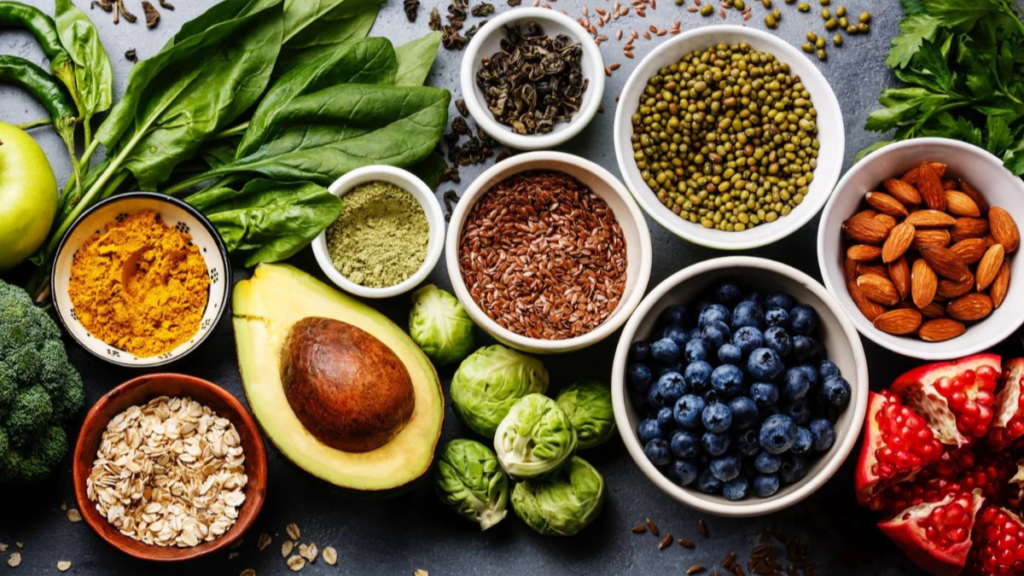

Maintaining healthy blood sugar is an important part of overall wellness. The foods you regularly eat can influence how quickly carbohydrates are digested and how your body responds to meals.
There isn’t one “magic” food for healthy blood sugar. Instead, a balanced eating pattern that includes fiber-rich foods, protein, healthy fats, vegetables, and minimally processed foods can support overall metabolic health.
Here are 10 nutritious foods worth adding to your diet.
1. Oats
Oats are a simple way to add more fiber to your diet. They contain soluble fiber, including beta-glucan, which can help slow digestion.
Choose rolled or steel-cut oats more often than heavily sweetened instant oatmeal.
Try topping oatmeal with berries, nuts, seeds, or plain yogurt for a more balanced breakfast.
2. Berries
Strawberries, blueberries, raspberries, and blackberries provide fiber, vitamins, and beneficial plant compounds.
Their fiber content makes whole berries a nutritious choice for meals and snacks.
Try adding berries to plain yogurt, oatmeal, or smoothies.
If you enjoy making smoothies, a quality blender can make it easy to combine berries with other nutrient-rich ingredients.
3. Leafy Green Vegetables
Spinach, kale, Swiss chard, and other leafy greens are nutrient-dense foods that provide fiber, vitamins, minerals, and relatively few carbohydrates.
They’re easy to add to almost any meal.
Try adding leafy greens to:
- Omelets
- Salads
- Soups
- Stir-fries
- Smoothies
4. Beans
Beans provide a combination of fiber and plant-based protein, making them a useful addition to balanced meals.
Black beans, kidney beans, chickpeas, and other varieties can be added to salads, soups, wraps, and grain bowls.
Try combining beans with vegetables, avocado, and whole grains for a satisfying meal.
5. Lentils
Lentils provide both fiber and plant-based protein.
They’re also versatile and can be used in soups, curries, salads, and grain bowls.
If you’re looking for an easy way to prepare larger batches of healthy meals, glass meal-prep containers can be useful for storing portions throughout the week.
6. Eggs
Eggs are a convenient source of protein and contain very little carbohydrate.
Adding protein to meals can help create a more balanced plate, particularly when combined with vegetables and high-fiber foods.
Try eggs with leafy greens, avocado, and whole-grain toast.
7. Avocado
Avocados provide fiber and monounsaturated fats along with potassium and other nutrients.
Their creamy texture makes them easy to add to salads, toast, bowls, and wraps.
Try combining avocado with eggs and vegetables for a nutritious breakfast.
8. Nuts
Almonds, walnuts, pistachios, and other nuts provide combinations of healthy fats, protein, fiber, vitamins, and minerals.
Because nuts are energy-dense, portion size is worth keeping in mind.
A small handful can make a convenient snack between meals.
9. Chia Seeds
Chia seeds are rich in dietary fiber and also provide healthy fats.
They can easily be added to oatmeal, yogurt, smoothies, and chia pudding.
Try adding chia seeds to breakfast alongside berries, oats, or plain yogurt.
If you’re not used to eating a lot of fiber, increase your intake gradually.
10. Plain Greek Yogurt
Plain Greek yogurt provides protein and can be a nutritious addition to a balanced diet.
Choose plain varieties rather than heavily sweetened versions if you’re trying to reduce added sugar.
Try combining Greek yogurt with berries, chia seeds, and a small handful of nuts.
Simple Tips for Supporting Healthy Blood Sugar
Individual foods are only one part of the bigger picture. Your overall eating pattern matters too.
Combine carbohydrates with protein
Pair foods such as whole-grain toast with eggs or fruit with plain Greek yogurt.
Choose fiber-rich foods
Beans, lentils, oats, vegetables, seeds, and whole fruits can help increase your fiber intake.
Limit added sugars
Sugary drinks, sweets, and heavily processed foods can provide large amounts of added sugar without many essential nutrients.
Pay attention to portions
Even nutritious foods can contribute significant calories when eaten in very large amounts.
Stay physically active
Regular physical activity is another important part of supporting metabolic health and healthy blood sugar.
A Simple Day of Balanced Meals
Breakfast: Oatmeal with berries and chia seeds
Lunch: Lentil and vegetable salad with avocado
Snack: Plain Greek yogurt with walnuts
Dinner: Protein of your choice with leafy greens, beans, and vegetables
This is simply an example of how protein, fiber, healthy fats, and minimally processed foods can be combined throughout the day.
Frequently Asked Questions
What foods support healthy blood sugar?
Foods rich in fiber, protein, healthy fats, and nutrients can be part of a balanced eating pattern. Examples include beans, lentils, oats, leafy greens, berries, nuts, seeds, eggs, avocado, and plain Greek yogurt.
Are fruits bad for blood sugar?
Whole fruits provide fiber, vitamins, minerals, and beneficial plant compounds. For most people, whole fruit can be part of a balanced diet. Whole fruit is generally preferable to fruit juice because it retains its fiber.
Is oatmeal good for healthy blood sugar?
Oats contain soluble fiber and can be part of a balanced diet. Choosing less processed oats and combining them with protein, seeds, nuts, or berries can create a more balanced meal.
Are nuts good for healthy blood sugar?
Nuts provide healthy fats, protein, and fiber and can fit into a balanced eating pattern. Since they’re calorie-dense, moderate portions are a practical choice.
What is the best diet for healthy blood sugar?
There isn’t one eating pattern that works for everyone. A diet emphasizing vegetables, whole fruits, legumes, whole grains, protein-rich foods, healthy fats, and minimally processed foods can support overall metabolic health.
Final Thoughts
Supporting healthy blood sugar isn’t about finding one miracle food or completely eliminating carbohydrates.
Instead, focus on your overall eating pattern.
Include plenty of vegetables, fiber-rich foods, protein, healthy fats, and minimally processed foods. Combining different food groups can also help create meals that are satisfying and nutritionally balanced.
Foods such as oats, berries, leafy greens, beans, lentils, eggs, avocado, nuts, chia seeds, and plain Greek yogurt can all have a place in a healthy eating pattern.
Small, consistent choices can add up over time.